
What is coaching in health and fitness? Coaching is a structured and collaborative developmental process where a guide (ideally a subject matter expert) helps an individual or team achieve specific personal or professional goals. In health and fitness, coaching can take many forms. For individuals looking to get stronger and improve their quality of life, a Strength Coach can be an ideal fit. In this article we’ll define what quality coaching entails, what a strength coach is and what a strength coach does. If you’re looking to get Stronger For Life, this article might help you take that first step.
Quality Coaching
What constitutes “Quality Coaching”? As per our definition there are four components integral to quality coaching and they are as follows:
- Structured: Is there a plan in place that outlines the journey from start to finish
- Collaborative: Is the plan based on a shared understanding of values and resources
- Developmental: Does the plan contain progressive stages that build up qualities relevant to goal attainment
- Expert: Although a PHD is unnecessary, there needs to be a baseline of expertise and/or access to a relevant referral network to ensure the entire coaching process is guided by sound evidence-based practice and is safe.
Now that you know what Quality Coaching is made up of, what is a Strength Coach?
Defining Strength Coaches:
Strength Coaches are fitness industry professionals who coach clients to improve their quality of life. This is achieved through participation in physical activity and health promoting nutritional behaviours. Specifically, strength coaches specialise in teaching people how to lift free weights efficiently. This entails a detailed needs analysis, programming strategies and technical coaching. As such, a defining feature is an emphasis on performance in the gym. This is important for many reasons, but I’d like to highlight two:
- Performance provides clear metrics and is contingent on clear structure and developmental phases.
- Performance also relies upon consistency with lifestyle modifications such as managing a health-promoting diet and sleep routine.
As such, a litmus test for whether or not someone is improving in their health and fitness is the gradual increase of fitness. This could be indicated by increased load on the bar or a better 5km pace. Increasing load isn’t always someone’s goal, nor does it guarantee health as some very overweight or unfit people can lift huge loads. Getting fitter doesn’t always mean someone is shifting unhealthy body fat. However, for populations such as older adults (65+), getting stronger and improving cardiovascular fitness is evidence of participating in an effective dose of health-promoting behaviours.
Simply put, it’s hard to get fitter and stronger if you’re not sleeping well enough, training too little or eating poorly.
What a strength coach does
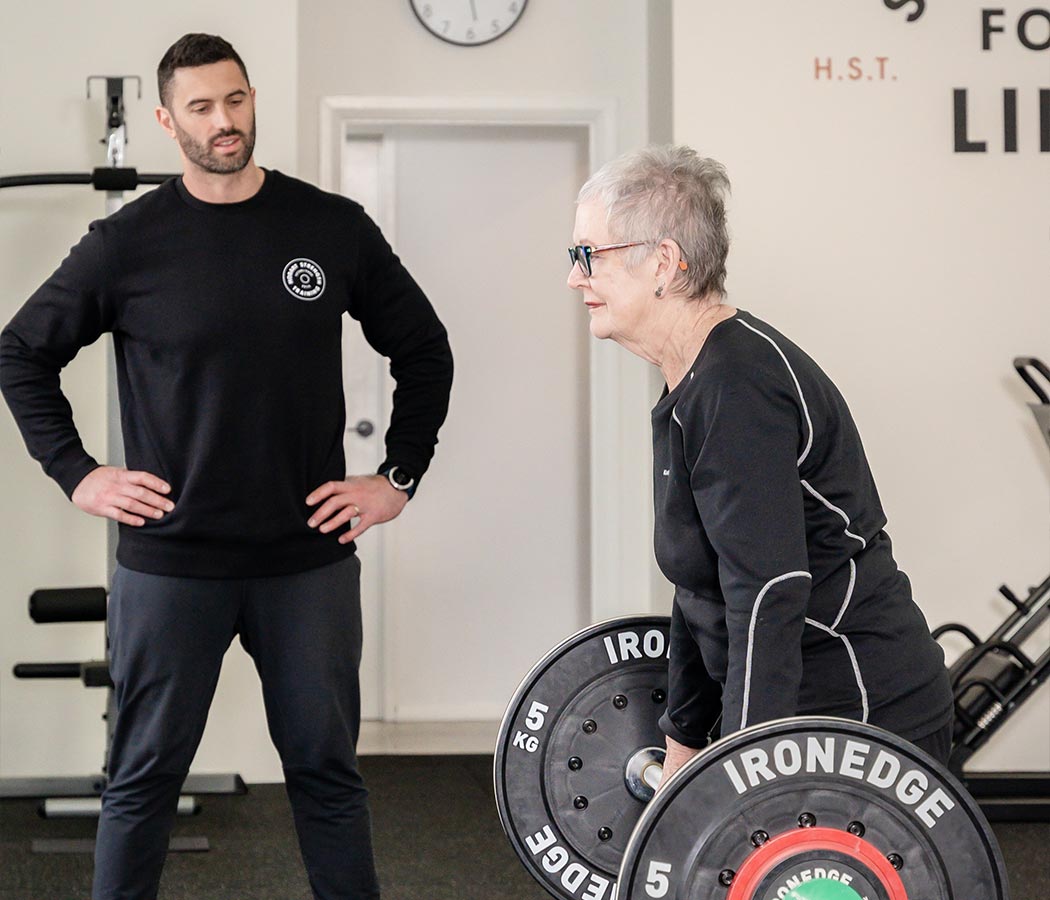
Good coaches should be great at listening, troubleshooting and asking the right questions. Listening is critical to any productive relationship and ensures everyone is on the same page. Importantly, listening ensures that a collaborative or shared approach isn’t just what the Strength Coach thinks is best, but is critically important to an individual or team, so their buy-in is high and as a result, motivation is high. Troubleshooting is simply about knowing where to look when something doesn’t work. A strength Coach doesn’t need to have a PHD or always know the answer but they can at least know where to look or who else to ask. Lastly, asking the right question provides feedback for further direction and clarity on whether or not an intervention is having the desired effect.
Let’s use an illustration to drive this point home:
A client who has a lower back that feels sensitive during hip hinging movements (i.e., Romanian Deadlift) may benefit from adjusting the rep range, tempo or range of motion or piece of equipment (i.e., barbell to dumbbells) just to reduce loading on the lower back. A strength coach doesn’t need to know *exactly* why the lower back hurts, but listening to the client and asking questions provides immediate information that can be utilized for the next step which might be to try short term modifications or refer outwards and work with another professional for a shared treatment plan.
Invest in a Hobart Strength Trainings Quality Coaching:
Hobart Strength Training is the place to find quality Strength Coaches. If you have a goal and are looking for a strength coach to facilitate structured, collaborative and developmental processes based on your goals, look no further. Our coaches emphasise a collaborative exchange where feedback and troubleshooting meets practical implementation to help individuals from all walks of life become Stronger For Life. Contact us today.