Improving bone density is critical to healthy ageing. The Australian Institute of Health and Welfare’s latest report estimated that 853,600 (3.4%) Australians had osteoporosis or osteopenia in 2022 ¹. However, as there may be many undiagnosed cases, the true prevalence, is likely to be higher. Osteoporosis, literally meaning ‘porous bones’ is a condition where bones become less dense, lose minerals such as calcium and increase in fragility. Minimal trauma fractures or broken bones are a major feature of osteoporosis and can occur with little or no trauma. These fractures can cause chronic pain, disability, loss of independence and premature death. Exercise interventions are recommended to combat low bone density. They are considered “an attractive alternative to medication due to the reduced cost, fewer serious side effects, and additional health benefits, including improved balance and fall reduction ².”
We have discussed the benefits of resistance training for improving bone density already. Today we will consider what happens if as House of Pain sang in 1992, you “Jump Around”.
An overview on jumping for bone density
A 12-month randomised clinical trial investigated whether resistance training or jump training could improve bone strength in physically active, middle-aged men with low bone density ². Importantly, the study progressively increased the difficulty of the jumping exercises. Participants in the jump group began with relatively simple jumps, including squat jumps, forward hops and lateral movements. After several weeks, they progressed to more demanding exercises such as bounding, box jumps and single-leg jumps. Finally, the program introduced high-intensity exercises, including depth jumps and jumps from a box. The researchers adjusted the program throughout the study based on participants’ progress, measured by a Vertec, a vertical jump device. This gradual increase in jumping intensity allowed the researchers to investigate whether progressively harder impacts could provide a useful stimulus for stronger bones.
Training for bone density
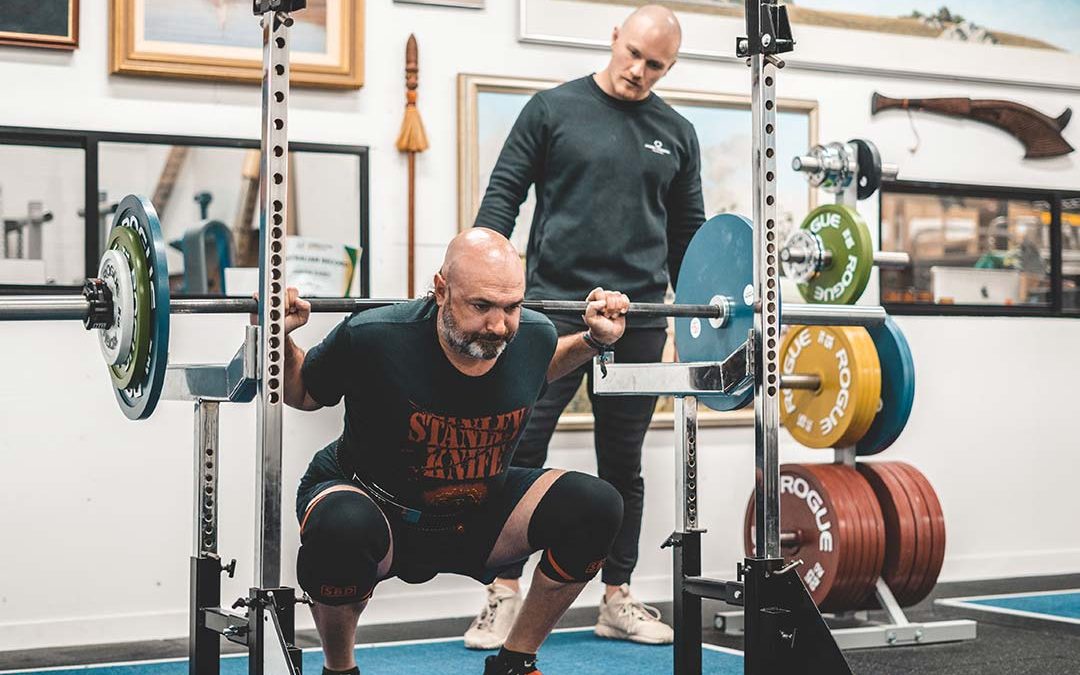
In the same study, the resistance training group trained twice per week. Their program focused on exercises that loaded the hips and spine, including squats, deadlifts, rows, lunges, overhead presses and calf raises. Training loads gradually increased throughout the study based on regular testing periods every 6 weeks. This cycle repeated eight times over the 12-month study. The program started with lighter weights and higher repetitions. It then progressed to heavier weights and fewer repetitions. This approach allowed participants to build strength while gradually increasing the load placed on their bones. Participants were instructed to perform the lowering part of each exercise in a controlled manner, then lifted the weight quickly.
So, what’s all the fuss about jumping?
Both training programs improved bone density, although the results differed depending on where researchers measured it. After six months, whole-body bone density increased by 0.6% in both groups and remained higher after 12 months. Lumbar spine bone density also increased by 1.3% in both groups and stayed elevated throughout the study. However, resistance training had an additional benefit at the hip. Hip bone density increased by 0.8% after six months and remained higher at 12 months. The jump training group did not show the same improvement. Importantly, both programs were well tolerated throughout the study. Researchers reported no injuries or other adverse events during more than 4,500 training sessions. Therefore, both jumping and resistance training may help improve bone density. However, resistance training produced improvements at the whole body, spine and hip, while jumping improved bone density at the whole body and spine.
Jumping as a tool for stronger bones
Resistance training is critical for improving bone strength. Squats, deadlifts, presses and rows provide a foundation for muscle strength, physical function and resilience. However, jumping is another tool in the toolbox. Hundreds of jumps each week should not replace strength training. Instead, a small amount of impact work once or twice per week could be helpful. This might include low-level hops, step-downs, pogo jumps or other simple jumping exercises. This approach can also work well at home or while traveling. A few sets of jumps require little equipment and can provide an additional training stimulus outside the gym.
Importantly, both approaches appear safe and effective for improving bone density in people with low bone mass ². The right approach depends on an individual’s current physical fitness, activity levels, preferences, time and available equipment. Impact training should also match someone’s current ability. If you are looking to begin jump training and are unsure where to begin, our experienced coaches can help you train safely. Contact us today.