Ageing is a fact of life. Although I can’t say with the utmost certainty “you’re only as old as you feel”, there are clear and effective ways we can continue to work on, and improve our quality of life as we age. Perhaps then it would be more accurate to say “the more you work on your health, the less old you’ll feel”. With that in mind, what are the particular priorities for health in an ageing population – what are the unique challenges adults over 65 may face? If grandiose goal setting is no longer as important, what are some realistic healthy targets to aim for, for day-to-day living? Lastly, if you’re looking to shave off time and frustration figuring out how to best care for yourself, how can expert guidance give you the best return on your efforts? Find out more in today’s article.
Unique challenges of ageing
Populations across the world continue to age. Accordingly, age-related issues are rising. Chronological age predisposes people to issues such as diabetes, cardiovascular/respiratory diseases, arthritic diseases and cancers ¹. In particular, “Frailty” is a significant issue. It is defined as “increased vulnerability to stressors across multiple bodily systems, a dynamic, multi-factorial process with cognitive and psychosocial components in addition to the physical components ² “. Sarcopenia and Osteoporosis are are conditions attributed to the Frailty syndrome. These conditions involve muscle-wasting and bone weakness respectively. Critically, frailty is multifactorial in nature. Key drivers include inequality, environmental and genetic factors. Additionally, a stressor event, such as a fall or traumatic accident may trigger a steep decline. Although we can’t control everything, two factors that are largely modifiable are physical activity and nutrition.

Targets for daily living
It comes as no surprise that increasing physical activity and improving nutrition status is protective for everyone, especially the ageing population. Let’s begin with activity. Guidelines recommend all individuals perform at least muscle-strengthening Resistance Training (Rx) twice weekly and accumulate 300 minutes of cardiovascular activity weekly. Muscle mass is influenced by the balance between muscle protein synthesis (MPS) and muscle protein breakdown (MPB). In this balance dietary patterns play a critical role. Many studies on diet are observational and don’t account for for factors such as alcohol intake, socioeconomic factors, mental health, and loneliness. However, protective effects for consuming less ultra-processed foods and more fruits and vegetables emerge ². These effects align with Nutrition Guidelines. Adhering to these guidelines results in higher intakes of fibre, protein and amino acids, antioxidants and complex carbohydrates. Importantly, exercise and diet can elevate MPS while suppressing MPB ¹ .
Dietary Examples:
With that in mind, here are realistic targets for daily living:
- At least 5 serves of fruits & vegetables a day. A serve is 75g or 1/2 cup of cooked vegetables (like carrots & broccoli) or 150g of a fruit such as an apple, banana or orange.
- 3 – 4 serves of dairy a day. This includes a cup (250ml) of milk, 200g of yoghurt or 40g of cheese.
- 3 serves of protein-rich foods per day. This includes legumes and lentils, but something as simple as 2 eggs (120g total) or 100g (weighed raw) of chicken per serve.
- 5 – 6 serves of grains per day. Preferentially, these are complex carbohydrates. 2 slices of toast (80g) would constitute two serves.
An example breakfast meal of an omelette made of two eggs, 40g of light cheese, 1/2 cup of cooked vegetables, two slices of toast and a 125ml (half a glass) of orange juice would be a fantastic start on hitting those daily targets.
Exercise Examples:
Physical activity guidelines recommend both Resistance Training and Cardiovascular Exercise. An example day of exercise could look like the following:
- 25 minutes of brisk walking (5.6 – 6.3 km/hour) which can be split into two shorter bouts.
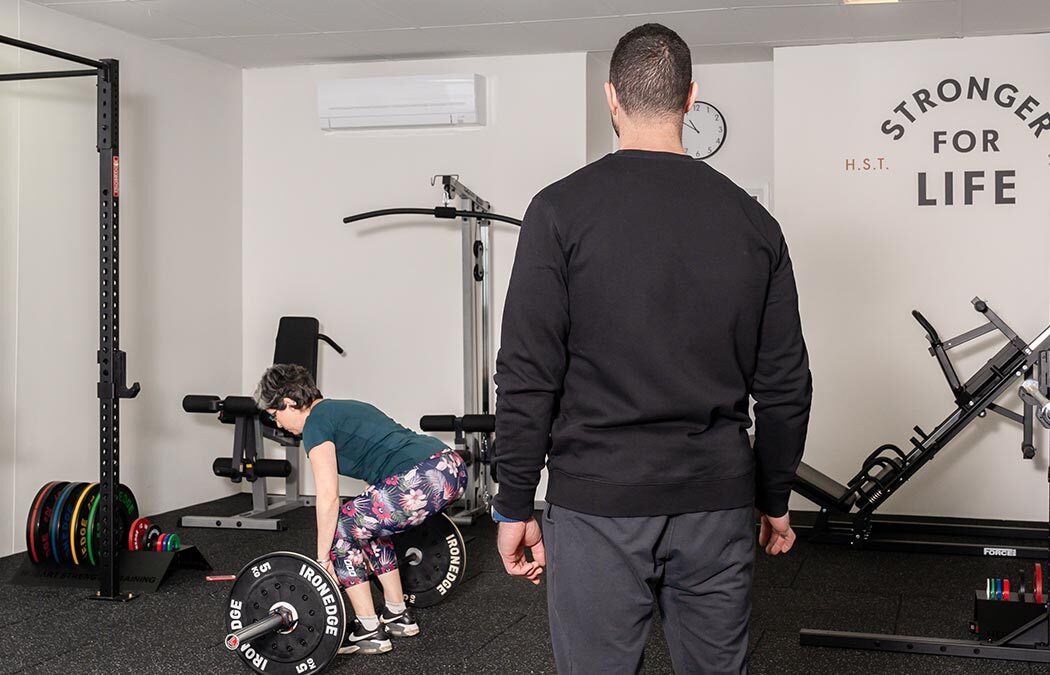
- A full body resistance training session which includes weighted exercises for the upper and lower body such as the Bench Press, Leg Press and Dumbbell Row.
- Continuing to maintain a healthy lifestyle which can include gardening, social activities with friends and housework.
Where the experts can help
Our coaches at Hobart Strength Training can help individuals find the appropriate starting point. With regards to resistance training, this includes the intensity (how hard), volume (how much), frequency (how often) and exercise selection (what to do). Twice weekly resistance training sessions training all major muscle groups is a fantastic start. Unique differences due to exercise and injury history, schedules and preferences will naturally emerge. Picking the correct entry point ensures a smooth starting point and maximises the positive outcomes of resistance training. With regards to diet, our coaches can indicate what foods are important to consume, what nutrients to look out for and in what quantities. Nutrition education may also be required. Simply learning how to utilise simple tools like nutrition labels can be pivotal in setting up long-term health promoting behaviours. Ageing doesn’t need to be synonymous with decline. Reach out to our coaches and beat frailty today.
References:
- https://pmc.ncbi.nlm.nih.gov/articles/PMC6202460/
- https://pmc.ncbi.nlm.nih.gov/articles/PMC8308545/