
Ageing is inevitable, but many of its worst effects are not. As we grow older, the risk of chronic disease and all-cause mortality increases. Skeletal muscle mass also declines by roughly 1% per year from middle age onward ¹. Over time, this loss reduces strength and function, contributing to a condition known as sarcopenia, which forms part of the broader syndrome of frailty. We have discussed sarcopenia before, but another major concern deserves attention: cardiovascular disease. Age strongly influences cardiovascular risk, yet lifestyle factors also play an important role. According to a 2023 report from the World Health Organization, crude cardiovascular disease mortality increased by about 6% between 2000 and 2019, partly due to the global rise in populations aged 65 and older ². In this article, we’ll explore energy intake, macronutrient distribution, and practical ways to eat well.
Energy Intake
Energy is released from food to fuel our bodies. Total daily energy expenditure or TDEE determines how much energy is required to maintain homeostasis (a term describing all the processes needed to function). As we age it’s not uncommon to think less energy is required. Regardless, older adults 65 years and above still require similar, if not more nutrients such as calcium ⁴. Older adults need to manage their TDEE to primarily do two things: prevent frailty and reduce the risk of chronic disease such as cardiovascular disease. Energy intake influences body mass, which in turn affects cardiovascular disease (CVD) risk in particular, independent of age. Excess body mass forces the heart to work harder, raising blood pressure, and promoting inflammation. Evidence shows that intentional weight loss can improve cardiovascular risk factors ². In contrast, large weight gain substantially increases CVD mortality risk ³. Overall, maintaining a healthy body mass appears important for managing cardiovascular risk, but what of frailty?
Macro and Micronutrients
Diet quality becomes increasingly important with age, as both macronutrients and micronutrients support muscle and bone, preventing frailty. Adequate protein intake helps preserve muscle mass, which supports mobility, independence, and physical function. While the standard recommendation is ~0.8 g/kg/day, older adults may benefit from around 1.2–1.5 g/kg/day, ideally distributed across meals ⁶, ⁷. Calcium is also essential for ageing populations ⁸. Most calcium is stored in bones and contributes to skeletal structure, while also supporting muscle contraction, nerve signalling, and cardiovascular function. When dietary intake is insufficient, the body draws calcium from bone tissue, increasing the risk of osteoporosis and fractures. Alongside protein and calcium, a diet rich in fruit and vegetables provides vitamins, fibre, antioxidants, and phytochemicals that support cardiovascular and metabolic health. In practice, healthy dietary patterns emphasise whole foods such as lean proteins, dairy or alternatives, whole grains, fruits, and vegetables, while limiting highly processed foods high in salt, sugar, and saturated fat.
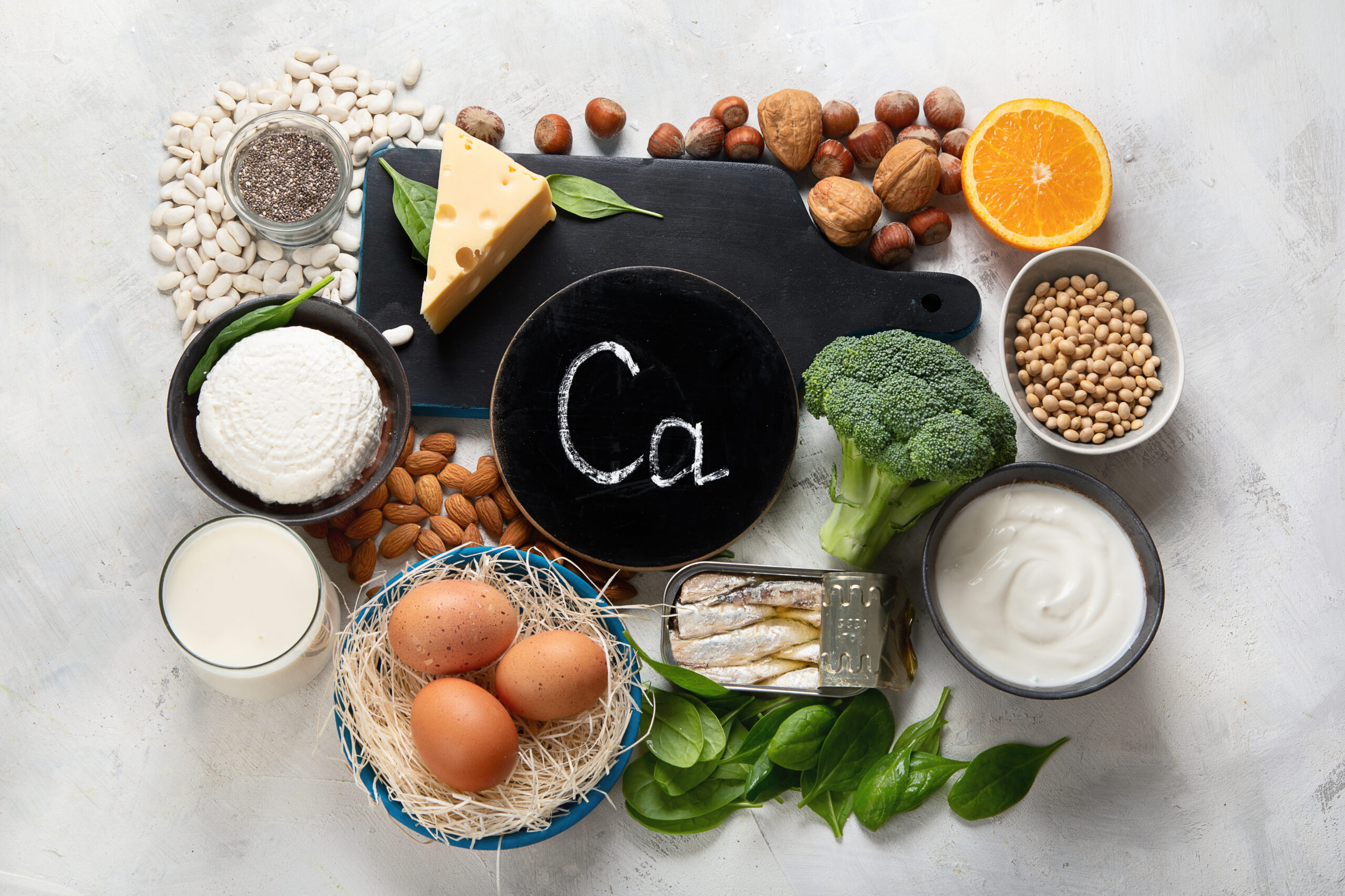
Foods High in Calcium for bone health, muscle constraction, lower cancer risks, weight loss. Top view
Putting It Into Practice
In practice, healthy eating for older adults does not need to be complicated. The goal is to combine adequate protein, calcium-rich foods, and plenty of fruit and vegetables across the day. For example, breakfast might include Greek yoghurt with mixed berries and oats, providing protein, calcium, and fibre. Lunch could be a wholegrain sandwich with lean chicken, salad, and a piece of fruit. Dinner might consist of grilled fish, roasted vegetables, and a serving of rice or potatoes. Snacks can help meet protein and energy needs, such as yoghurt, nuts, fruit, or a glass of milk. Spreading protein intake across meals helps support muscle repair and maintenance, especially when combined with regular resistance training. When built around whole foods like lean proteins, dairy or alternatives, whole grains, fruits, and vegetables, this style of eating can support strength, bone health, and long-term physical function as we age.
We believe in being Stronger For Life. This means not just living longer but maintaining the strength and capacity to live well. By managing energy intake, prioritising nutrient-dense foods, and ensuring adequate protein and calcium, older adults can support both cardiovascular and musculoskeletal health. If you’d like help building a practical plan that fits your lifestyle, our expert team at Hobart Strength Training are ready to help. You can contact our team here.
References:
- https://www.jacc.org/doi/10.1016/j.jacasi.2024.02.002
- https://journals.plos.org/plosone/article?id=10.1371/journal.pone.0121993&mc_cid=86c09d830b&mc_eid=cbb7247a26
- https://pubmed.ncbi.nlm.nih.gov/16891382/
- https://www.eatforhealth.gov.au/eating-well/healthy-eating-throughout-all-life/healthy-eating-when-you%27re-older
- https://pmc.ncbi.nlm.nih.gov/articles/PMC8707325/ – dietary health while ageing
- https://pubmed.ncbi.nlm.nih.gov/27338461/
- https://pubmed.ncbi.nlm.nih.gov/32977714/
- https://pubmed.ncbi.nlm.nih.gov/37602580/