Athletic aspirations don’t need to come to a crashing halt just because you’ve aged. At least, at Hobart Strength Training we certainly think so. As much as possible, we want for you to live life to the fullest. Increasing physical activity by way of strength training and performing cardiovascular exercise is critical for longevity. Most people understand that and it’s common now to hire a strength trainer, coach or personal training for the gym. However, what about getting outside and doing some cardio? For some, nothing beats hitting the pavement, for others, they couldn’t imagine anything worse. In our teens and 20s, sport was an easy way to meet cardiovascular exercise requirements, and a game of footy I think, is far more enjoyable than running. That being said, it’s often dropped as we age for time management or physical ability reasons. Today’s article we’d love to explore if sport should still feature in someone’s life as they age. Second, we’ll discuss growing sports for older adults and lastly, how strength training can help.
Participation in Older Adults
A recent systematic review found that structured sport participation for people ages 60 years and over improved cardiorespiratory fitness, mental health, and body composition to inactive controls ¹. In other words, older adults are not “too old” for sport. In this review, the majority of interventions studied involved small-sided soccer, handball, floorball (hockey), or golf. Sessions often reached moderate-to-vigorous intensities consistent with World Health Organization guidelines (150–300 minutes of moderate activity per week). However, the same review found uncertain effects on strength, lean mass, balance, and bone mineral density. That distinction matters and the reasoning is clear. Sport clearly improves fitness, but it does not reliably build the muscular strength or skeletal robustness that underpin long-term independence. This makes sense as many sports lack the ability to progressively load tissue and bone. For older adults, injury rates were higher than in general exercise settings, although most were minor. It’s clear that older adults can remain athletic, however preparation and complementary strength work are critical for quite literally, “staying in the game” as long as possible.
Reasons for participation
Physical benefits aren’t the only ones that sport can provide. A large systematic review examining adults aged 55+ found that the strongest motivations were both maintaining physical and mental health ². Mental health is a broad umbrella term but it includes being part of a supportive community and feeling connected to a team. In fact, over 80% of studies highlighted friendship, belonging, and social engagement as key drivers of participation. Competition also remains important. Many older adults value the opportunity to challenge themselves, set goals, and achieve meaningful outcomes, even if the level of competition differs from their younger years. Sport provides structure, identity, and a shared purpose. Collectively, these elements contribute to what researchers describe as “successful ageing”. Successful ageing includes maintaining physical capacity, cognitive function, emotional well being, and lastly, social engagement. It’s obvious that older adults do not just play sport to stay fit. They play to stay connected, capable, and engaged in something that continues to matter.
Strength sports for ageing populations
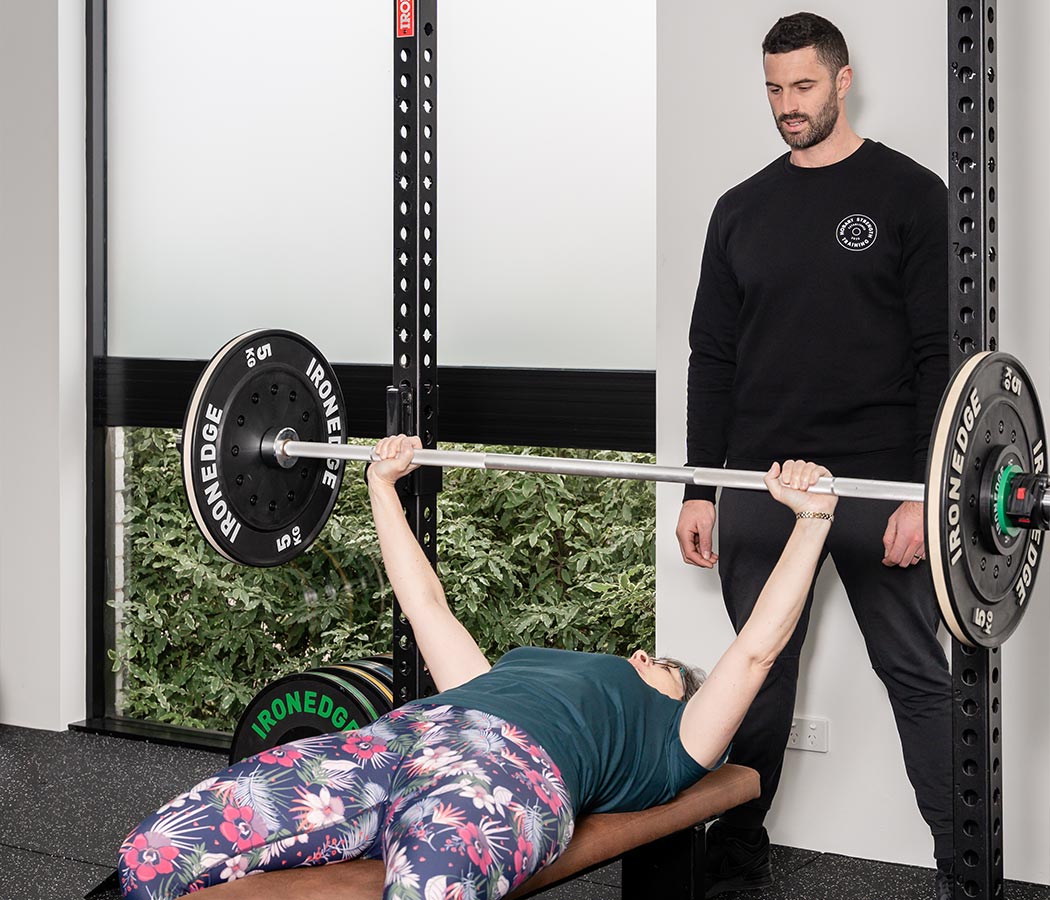
Training for the sport of Powerlifting is niche but nonetheless, an interesting case study in how older adults can stay physically active. One qualitative evaluation of a community “Never Too Late” Powerlifting program in regional Victoria reported very high retention (around 95%) and included participants aged roughly 59 – 79 ³. Participants didn’t just describe getting stronger they described regaining trust in their bodies. Common themes were improved confidence, better balance and mobility in everyday life (stairs, hills, getting up and down), and meaningful mental health benefits like lower stress and a more positive outlook. A big driver was the coaching environment: small groups, close supervision, and a coach who could scale movements safely. That matters, because the biggest barriers were psychological. There was fear of pain, fear of injury, low self-efficacy, and feeling out of place in a “weights” environment. Cost also came up as a barrier, but many still viewed it as “money well spent” because the program delivered tangible results and a sense of purpose. Strength training, something everyone should do almost becomes a gateway to Powerlifting. It’s incredibly encouraging seeing people well into their 80s set Personal Bests such as Ravi Sood, who at 82 is traveling to South Africa to represent Australia at the World Masters Powerlifting Championships ⁴.
Age fit, Age Strong, Age Successfully
Sport does not need to disappear as you age. In fact, it can remain one of the most enjoyable ways to stay active. If your chosen sport gets your heart rate up, it’s excellent for cardiovascular health. However, sport alone does not reliably build the strength and tissue resilience required to tolerate those demands long term. Therefore, pairing field or court sports with structured strength training helps protect joints, improve force production, and reduce injury risk. Strength work keeps you capable of continuing to play. Conversely, if you gravitate toward strength sports such as Powerlifting, you are building muscle and bone density, but your cardiovascular system still requires dedicated stimulus. Adding intentional aerobic training supports heart health, recovery, and overall longevity. Ultimately, athleticism is not age-dependent. With intelligent programming, a supportive community and expert coaching, capacity can be built and maintained well into later decades. Successful ageing means your athletic aspirations don’t have to stop. If ageing fit, strong and successfully sounds good to you, contact us today.
References:
- https://bjsm.bmj.com/content/57/4/230
- https://pmc.ncbi.nlm.nih.gov/articles/PMC7749227/#sec0019
- https://austinpublishinggroup.com/gerontology/fulltext/ggr-v6-id1046.pdf
- https://www.abc.net.au/news/2025-10-09/powerlifting-champion-aged-82-and-ready-to-represent-australia/105868066