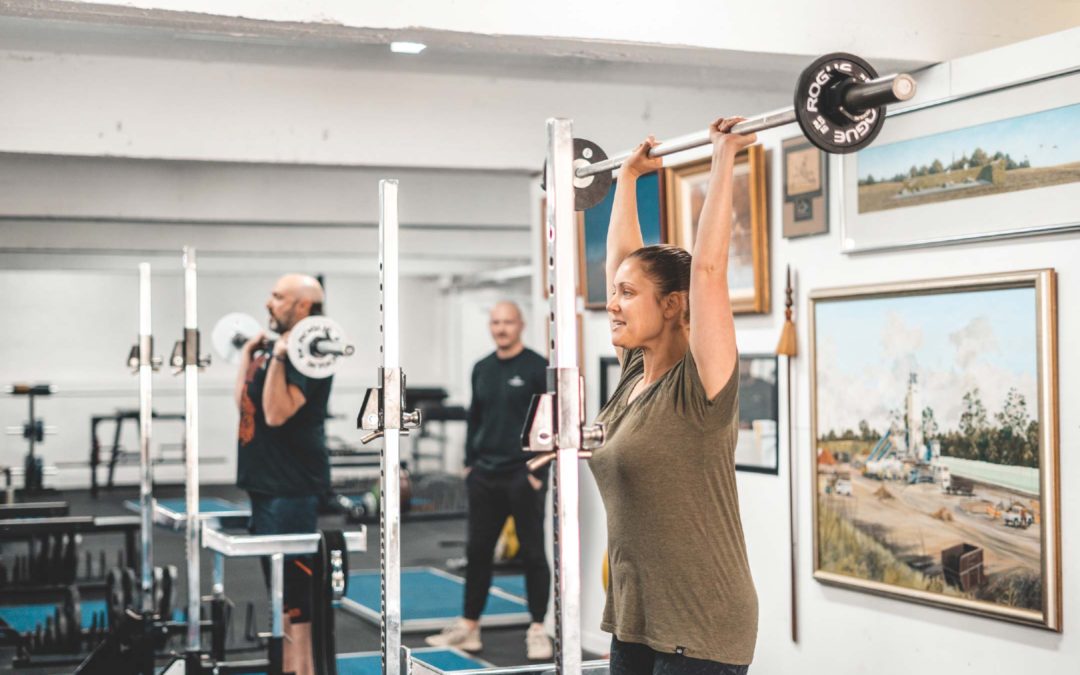
Getting older doesn’t mean slowing down. In fact, one of the best things you can do for your future self is invest in the physical qualities that keep you moving confidently: strength, and power. These aren’t just fitness attributes, they’re quantifiable factors that determine independence and help you maintain that pep in your step. Power, defined as your ability to produce force quickly is the quality we lose the fastest with age. Research shows that age-related declines in muscle power occur earlier and more steeply than declines in maximal strength, primarily due to the faster loss of fast-twitch muscle fibres ¹. Drops in strength and power can make simple movements feel harder and lead to a loss of independence, but targeted training can meaningfully improve how well we function as we age. Let’s take a closer look at how.
Build a Base of Strength
Strength is the foundation everything else sits on. It’s simply your ability to produce force. Without a solid strength base, power becomes harder to train, and daily activities require more effort. Even though it’s shown power declines quickly, muscle force is a component of power. Maintaining strength is the first thing someone can do to maintain a baseline of power. Research shows that muscle strength determines mobility, independence, reduced fall risk and reduced all-cause mortality ². Importantly, heavy strength training prevents the loss of fast-twitch muscle fibres.
Data shows that Adults lose an average of 1 – 3% of strength per year after age 50 without resistance training ¹. To combat this, regular strength training can increase strength by 30 – 150% in older adults, depending on training level ¹. Strength training has a myriad of benefits including improving insulin sensitivity, bone density, and joint health, even in those starting later in life. Think of strength as your physical “savings account.” The more you build, the larger your buffer against injury, fatigue, and decline. Strength training all major muscle groups two-to-three times per week is ideal, but even once a week yields meaningful benefits. If you’d like to know what a strength training program could look like, check out our article here.
Get Powerful
So you understand that you need a base of strength, but why does power matter? Power underpins quick, real-world reactions where movement occurs fast. This could include the following instances:
• catching yourself after tripping
• stepping over a curb
• rising from a chair with momentum
• shifting your centre of mass when a bus or train jolts
A reduction in muscle power is closely linked to slower reaction times and reduced ability to correct balance in unexpected situations. These are key contributors to falls. Data shows that older adults may lose up to 3 – 4% of muscle power per year after age 60. To combat this, specialised power training may be necessary. Research shows that a resistance training program using moderate to heavy loads (around 70% of 1RM) with the goal of moving the weight as fast as possible can improve both strength and power, while still supporting hypertrophy. However, as Hadouchi et al. noted, it’s also possible that in individuals with a larger decline in power, training with lighter loads moved explosively may produce even greater effects ². With that in mind, let’s discuss training for power.
How to train explosively
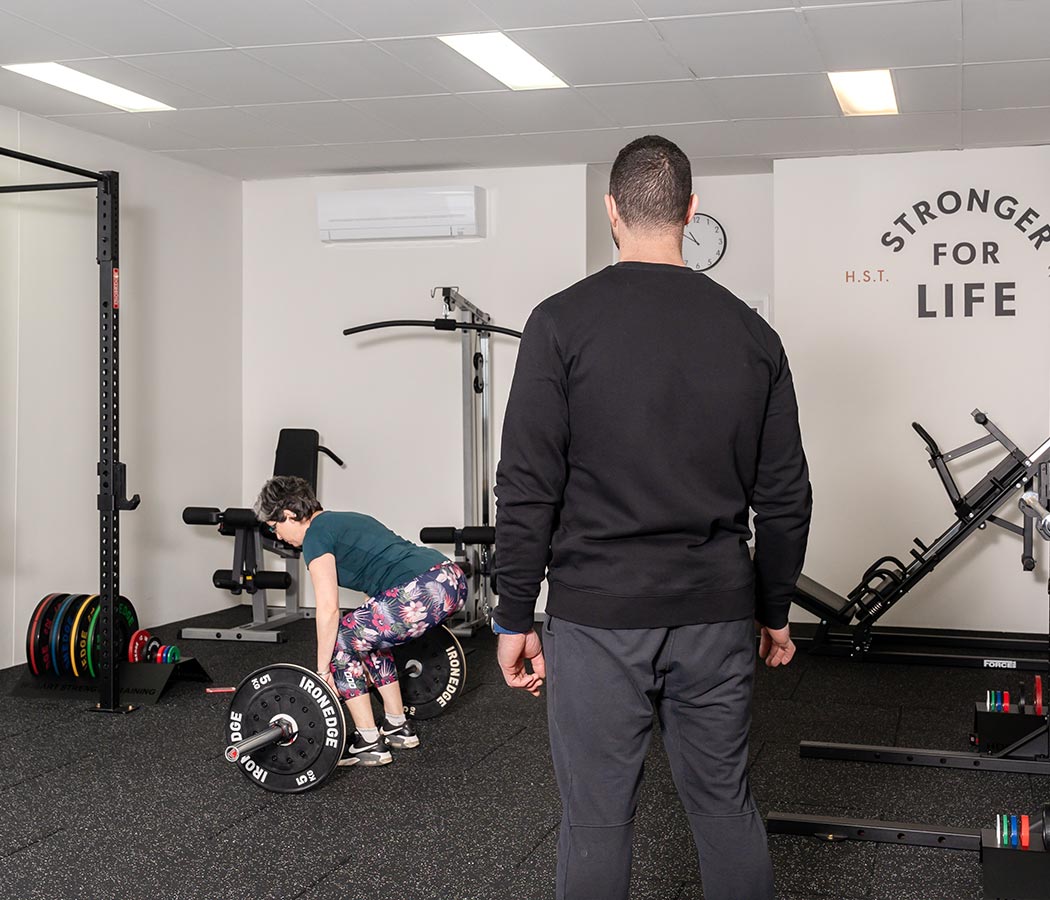
As discussed, some people may benefit from incorporating power-focused training, which generally uses lighter loads moved at higher velocities (in contrast with moderate-to-heavy strength work). This approach can help improve the rate at which force is produced (RFD), a quality that contributes to effective balance recovery. With that in mind, including some higher-velocity resistance exercises can be a practical complement to your strength training. Our recommendation is to continue building a base of strength and, in order of priority, consider the following:
- Start by moving your light warm-up loads with clear intent, pushing hard and fast while maintaining control.
- Even though working sets feel heavy, aim to move them as quickly as you can while keeping good technique.
- If appropriate for your skill level, incorporate simple derivatives of Olympic-style lifts that build on your existing strength work, such as a push press or clean pull.
- Include straightforward accessory exercises that let you load the muscles, experience a small amount of impact, and move with speed such as step-ups or Pendlay rows.
Final Thoughts
Ageing well isn’t about avoiding decline. Instead it’s about building the physical qualities that keep you capable, confident, and independent. Power helps you react quickly and avoid falls. Strength provides a solid base for everything you do. Although strength training forms a solid foundation, spending time doing some explosive training allows someone to develop more speed and intent move. Additionally, the impact from jumps, Olympic lifts and contacts with the floor may have some additional bone density benefits. Even small doses of these three elements in your weekly routine make a meaningful difference. It’s never too late to start and your future self will thank you for keeping a pep in your step. If you’re unsure where to begin, contact our expert coaches to step towards a more powerful you.